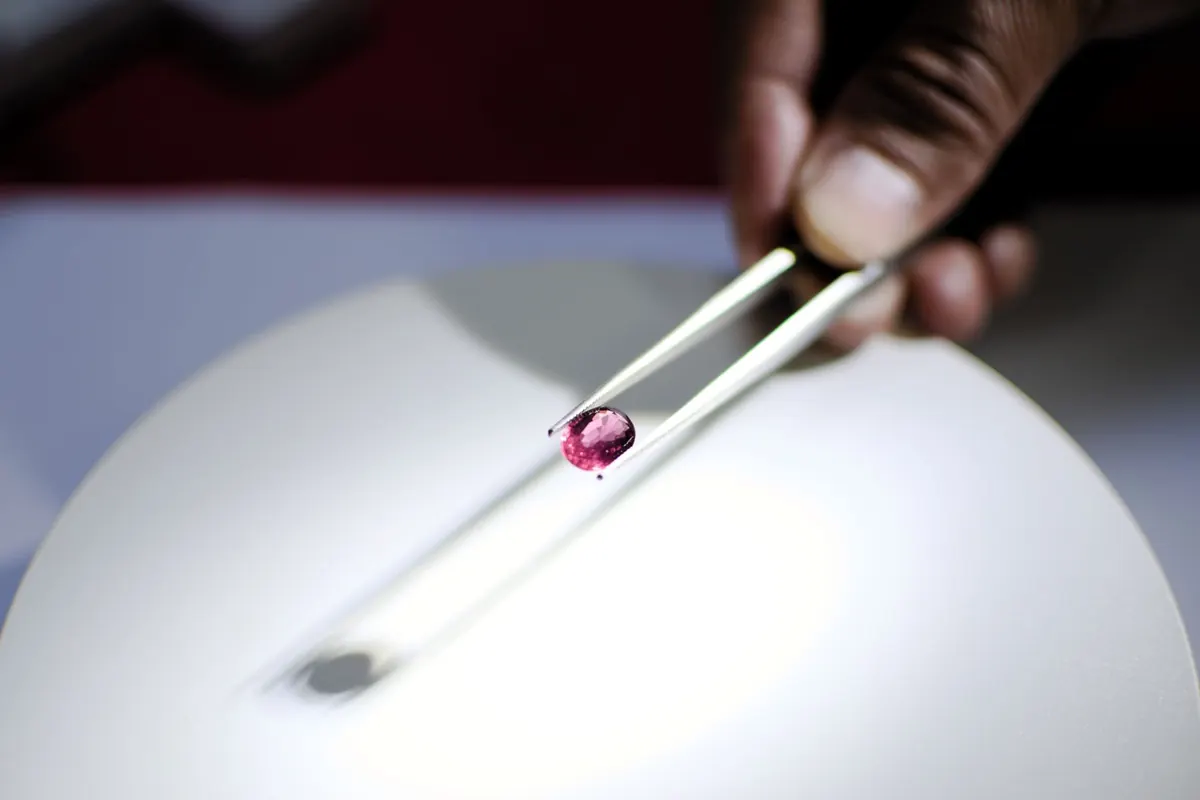
Put a loupe to an emerald and the first thing most people notice is the garden of cracks inside it. Tilt the stone under a lamp and one of those cracks may flash a quick, unnatural blue. That flash is your first lesson in gemstone treatments: it usually means the fracture has been filled with oil, resin or glass, a practice as old as the trade itself.
Treatments are not a trick. Most coloured stones, and a fair number of diamonds, are treated in some way before they reach a shop window. A treated stone can be beautiful, durable and honestly priced. What matters is whether anyone tells you what was done, and whether the price reflects it.
A sapphire that has been heated to improve its colour is still a real sapphire, formed in the earth. It is not synthetic and it is not fake. The trouble begins when a heated stone is sold at unheated prices, or when a filling is described as “a touch of oil” and never mentioned again.
The vocabulary of the trade does not help. Natural means grown in the ground rather than in a laboratory; it says nothing about treatment. Genuine is a sales word with no agreed definition. Certified means nothing at all unless a laboratory is named and the report number can be checked independently. When a seller says a stone is “certified natural”, ask which lab, and ask to see the paper.
The most reliable protection is unglamorous: a written description, a named laboratory for anything expensive, and a return policy you have read before you pay.
Heating is the workhorse of the trade. Most rubies and sapphires on the market have been heated, often well above 1,000 °C, to deepen a weak colour, lighten an overly dark one, or dissolve the fine rutile needles known as silk that make a stone look cloudy. Tanzanite is routinely heated, aquamarine is often heated to remove a greenish cast, and much of the citrine on sale is amethyst that has been through an oven.
The results are permanent and generally stable. Heating is not the problem. The problem is the price gap: unheated sapphire of comparable quality commands a serious premium, and the difference is not always visible across a counter. A lab can usually tell the difference by studying how inclusions have behaved at temperature. Your loupe can only hint at it — partially melted silk, or tiny crystals with frosted-looking halos around them, are worth asking about.
One nuance to know: some corundum is heated with a flux such as borax, which can leave a glassy residue in surface-reaching fractures. That is heat treatment plus a mild filling, and it should be disclosed as such. Also remember that straight colour zoning in a sapphire tells you how the crystal grew in the earth; it says nothing about heating either way.
Filling a crack with a substance of similar refractive index makes the crack harder to see. Emerald is the classic case, where oil, resin and modern prepolymers are used to reduce the visibility of the internal fissures that are almost part of the stone’s character. Ruby is filled with lead glass at the cheaper end of the market, and diamonds are sometimes clarity-enhanced by filling reaching fractures with a glassy material.
Under a fibre-optic light, look for the flash effect: a quick blue or orange glint along the plane of a fracture that appears as the stone is rocked. You may also see trapped bubbles in the filler, or a filling that has gone cloudy or shrunk slightly with age. Filled stones need care. Keep them away from ultrasonic cleaners, steam and jewellers’ torches, and tell any jeweller who works on the piece that the stone is filled.
If you are buying an emerald, ask for the degree of oiling — reports usually describe it as minor, moderate or significant — and ask whether the filler is oil or resin, colourless or tinted. A colourless oil in a minor amount is one thing; a tinted resin in a heavily fissured stone is another, and the price should say so.
Diffusion drives colour into a stone from the outside at high temperature, with a colouring element present. In sapphire, two versions matter. Surface diffusion creates a thin blue layer near the surface. Lattice diffusion, typically using beryllium, pushes colour deeper and can produce orange, pink and padparadscha-like hues.
The visual signature of a surface-diffused sapphire is colour that looks slightly painted on: it can concentrate along facet junctions and around the girdle where polishing has cut into the coloured layer. Immersing the stone in a heavy liquid makes the shallow band easier to spot, but only a laboratory can confirm it properly. The practical consequence is worth remembering: repolishing a surface-diffused stone can remove its colour.
Ask these before money changes hands, and get the answers in writing where you can:
Then use your eyes and a loupe, in this order: clean the stone, look at the pavilion through the table under a lamp, switch to raking light for surface wear and coatings, and finish with a fibre-optic light for flash effects and dye concentrations.
Most sellers are honest and will answer a direct question without flinching. The ones who get vague when you ask about heat treatment, or who produce a “certificate” with no laboratory name on it, are telling you something useful.
For a modest purchase, a written description and a sensible return policy are usually enough. For a significant one, budget for an independent check by a recognised laboratory before the return window closes, and treat the report as part of the cost of the stone rather than an optional extra. Treated gems are legitimate, often lovely, and often the only sensible way to own a particular colour. You just want to know which one you are buying.
Photo: viarami / Pixabay