Pavé is the technique that hides the most work in the smallest space. A band of tiny diamonds can hold fifty stones or more, each seated in its own drilled seat and locked in place with a bead of metal raised from the surface around it. Done well, the result stops looking like a row of stones and starts looking like a ribbon of light following the curve of the metal. Done badly, it can pass in a photograph and fail completely under a loupe: tables tilted, spacing uneven, beads flattened, one stone already shifting in its seat.
You do not need a workshop to tell the difference. You need a 10x loupe, ten quiet minutes and a fixed order of inspection. The order matters, because a piece that looks immaculate at arm's length often shows its first flaw only when you tilt it into raking light. Start there, not with the overall impression.
Dirt is a convincing imitation of poor setting. Dust and skin oil fill the gaps between stones and dull the metal, so clean the piece before you judge it: warm water, a drop of mild washing-up liquid, a soft brush, then a rinse and a dry with a lint-free cloth. Skip the soak for pearls, opal, emerald, turquoise and any older piece that might contain glued elements. A barely damp cloth is safer for those.
For light, one desk lamp with a sheet of tracing paper taped over the shade gives you a soft source you can move around. Bring it low, almost level with the surface of the jewelry. That raking angle reveals tilted stones, uneven beads and tool marks that vanish under overhead light. Daylight near a window works well too, as long as the sun is not hitting the piece directly.
A 10x loupe is the right power for this work. Stronger magnification narrows the field and magnifies your own hand tremor. Brace your elbows on the table, hold the piece steady, and work over a cloth-lined tray so that nothing bounces away if it slips.
Look along the row rather than down at it. Close one eye, bring your sightline level with the surface, and follow the band from end to end. Any stone sitting a few degrees off, or standing proud of its neighbours, breaks the line immediately. This is the single fastest test of a setter's eye.
Then check the tables. Each stone's flat top should sit roughly parallel to its neighbours and just below the level of the beads around it, so the surface reads as a continuous plane. On fancy shapes, look at rotation as well: marquise and pear cuts should point in a consistent direction along the row, not wander.
Straight runs are unforgiving. On an eternity band, a bangle or the shoulders of a ring, the eye reads the whole row at once, and a single wobble is visible from across a table. Curves are more forgiving of micro-adjustments but less forgiving of crowding, which is why the next check follows closely.
In a well-set row, the metal between the stones reads as a regular dotted rhythm. Gaps do not have to be identical to the hundredth of a millimetre, but they should feel even. One wide gap next to one tight gap is a warning sign: it usually means a stone was replaced without redrilling the seat, or that the spacing was laid out by eye on a bad day.
Pay particular attention to tapered sections and tight corners. Where a row narrows, the setter has to compress the spacing, and this is where stones end up touching, with girdles pressed against each other and no metal left to hold them properly. On the outside of a curve, the opposite problem appears: stretched gaps that leave the border beads thin and exposed.
Finally, look at the border. Stones should sit close to the edge of the metal without breaking through it, and the rim beyond them should be thick enough to take wear. A row set so close to the edge that the metal feathers away will not survive years of contact with a sleeve or a door frame.
This is the part that decides whether a piece goes back on the bench or into the box. Work through it slowly, stone by stone, and do not skip the awkward ones near the settings or under the gallery.
Then turn the piece over. Look at the underside of the gallery and the inside of the band: drilled holes for light and cleaning should be clean and consistently placed, not ragged or half-finished. If you find one loose stone, have a jeweller check the whole row, since wear tends to be local and neighbours are usually close behind.
The metal between the stones is where a workshop's standards show. On higher-grade work you will see bright cutting: small facets cut around each bead with a graver so the metal sparkles alongside the stones. Those cuts should be crisp and consistent in angle, not smeared or half-made.
Look for tool marks and file scratches in the recesses, and for pitting in the beads, which points to porosity in the casting. Check plating too. Rhodium over white gold should be even and should not bridge the gaps between stones or leave a grey film across a stone; plated-over diamonds look dull and are a nuisance to correct. And look where nobody looks: the inside of the shank, the back of the gallery, the underside of the border. Polished and finished there means the piece was made by people who care about the parts you cannot see.
Classic bead setting uses a visible bead and a little metal around each stone. French pavé cuts small V-shaped notches so less metal frames the stones, giving a sharper, more open look. Micro-pavé uses stones small enough to require setting under a microscope, with beads finer than a grain of salt; expect to need 15x or 20x to judge it fairly, and understand that such work is delicate to repair. Each style has its own rhythm. Judge the piece in front of you against its own method, not against a photograph of something else.
When you are looking at a piece in a shop, at a fair or at home, run the same sequence every time. It becomes automatic within a few pieces.
If you are buying at a distance, ask for sharp macro photographs taken through a loupe, ask which setting method was used, and confirm the return terms before you commit. For anything expensive, a short independent inspection by a jeweller you trust costs little compared with the repair bill on a failing row. Pavé rewards patience: the flaws are small, but so is the work, and the same loupe that finds them also shows you exactly why good hand-setting still commands respect.
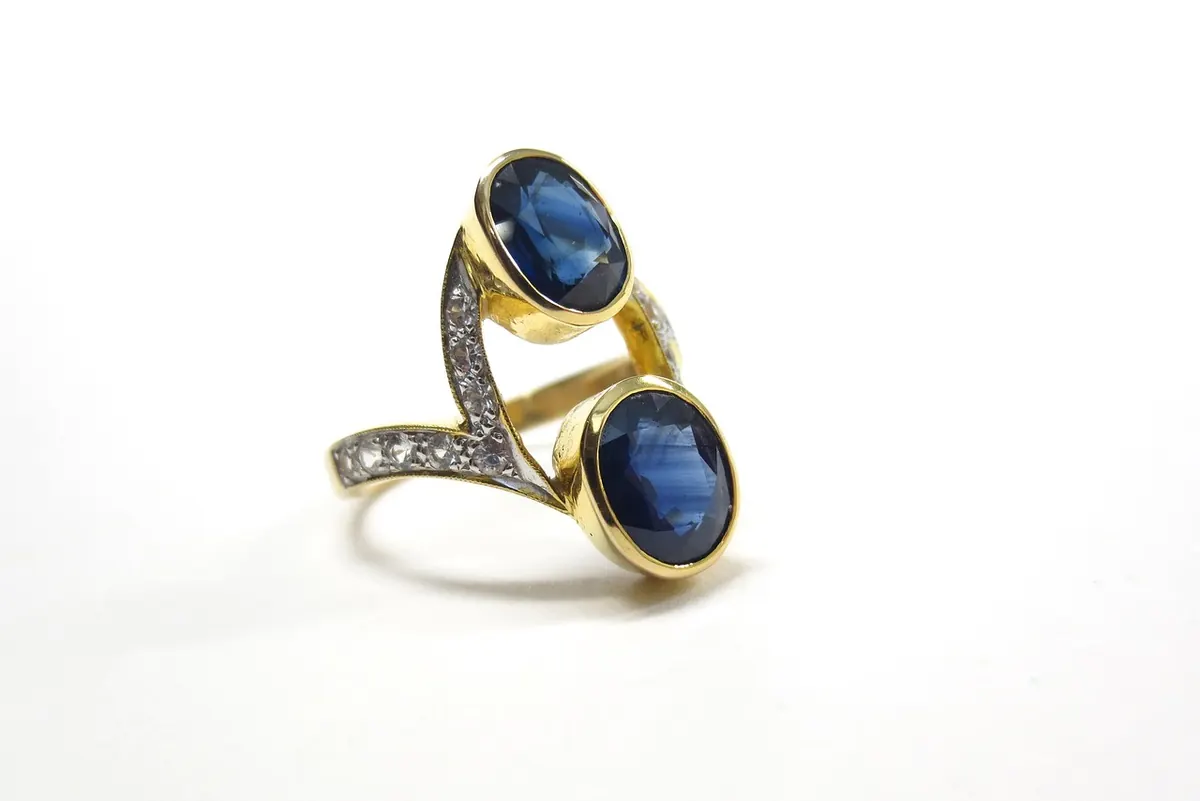
Photo: sarakgraves / Pixabay